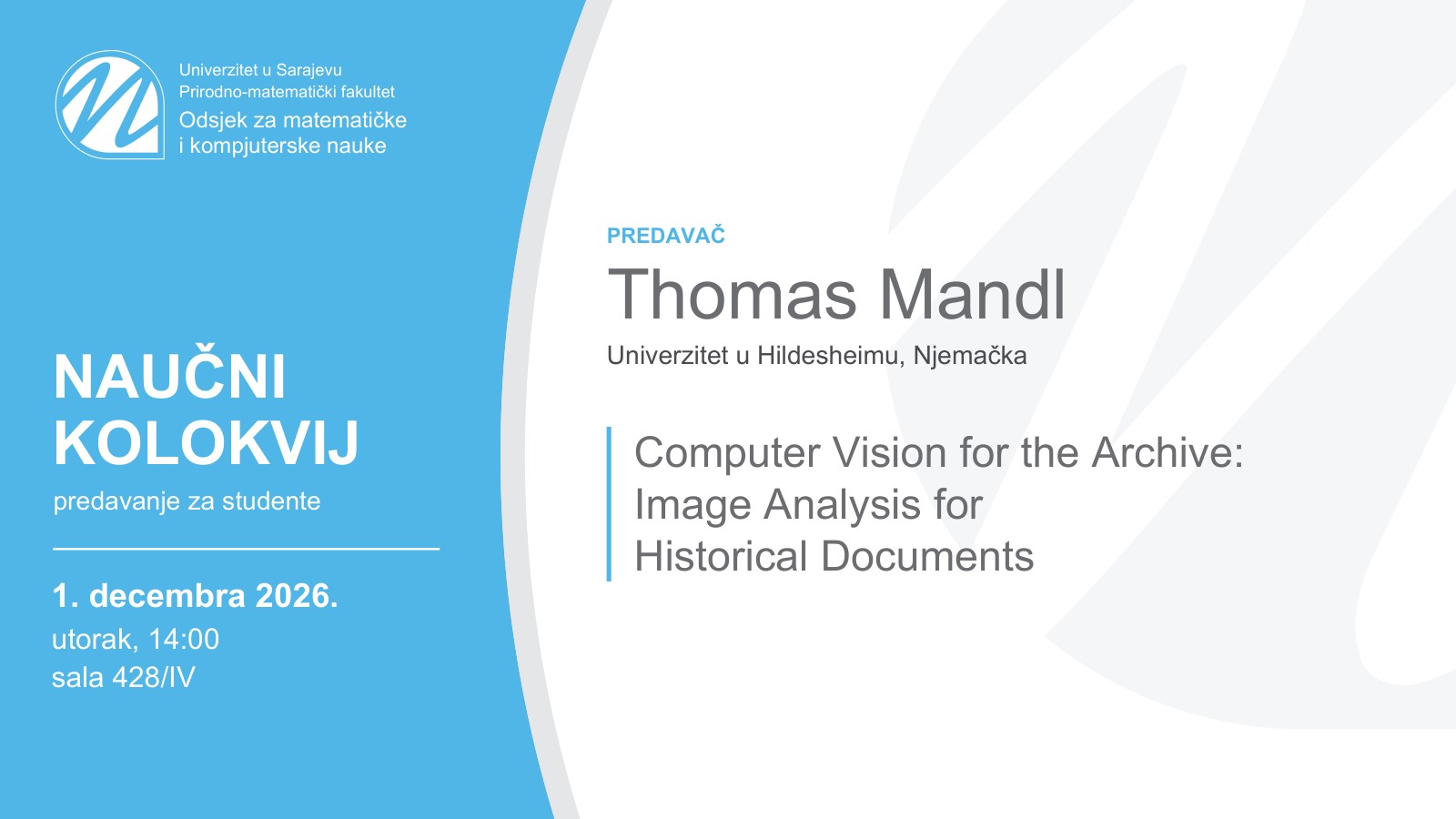
Naučni kolokvij: Thomas Mandl, „Computer Vision for the Archive: Image Analysis for Historical Documents“, utorak 1.12.2026. u 14:00
U okviru naučnog kolokvija Odsjeka za matematičke i kompjuterske nauke prof. dr. Thomas Mandl s Univerziteta u Hildesheimu (Njemačka) održat će predavanje „Computer Vision for the Archive: Image Analysis for Historical Documents“. Predavanje je namijenjeno studentima, a održat će se u utorak, 1. decembra 2026. godine, s početkom u 14:00 sati, u sali 428/IV.
O predavaču
Prof. dr. Thomas Mandl je profesor informacijskih nauka na Institutu za informacijske nauke i jezičke tehnologije Univerziteta u Hildesheimu. Studirao je informacijske i računarske nauke na Univerzitetu u Regensburgu i na University of Illinois at Urbana-Champaign, a radio je kao istraživač u Informacionom centru društvenih nauka u Bonnu. Doktorirao je 2000. i habilitirao 2006. godine. Bavi se pretraživanjem informacija, interakcijom čovjeka i računara i višejezičnim informacionim sistemima, a posljednjih godina i primjenom računarskog vida na historijsku građu.
Sažetak (na engleskom): CNNs and Vision Transformer have brought great advances in Computer Vision. Nevertheless, many rich visual archives, preserved in printed books and manuscript collections, remain underexplored in terms of systematic digital access based on visual search. The talk focuses on the information access to historic books, early modern portraits and photographs. The specific challenges of applying AI technology to such cultural heritage data will be explored. This presentation will also discuss the ViFaPi project (Visual Scholarly Information: Automated Image Processing for Plants in Historical Prints, Manuscripts, and Herbaria), which applies artificial intelligence and computer vision techniques to historical botanical sources. Drawing on methods used in apps like PlantNet, these automated approaches enable the detection of visual similarities and structural patterns across large image collections. ViFaPi allows the analysis of the transmission of botanical knowledge across time and space. This opens new pathways for exploring archival holdings and conducting systematic research based on visual data. The talk will also briefly explore some results regarding explainability and patch ranking within vision transformers.